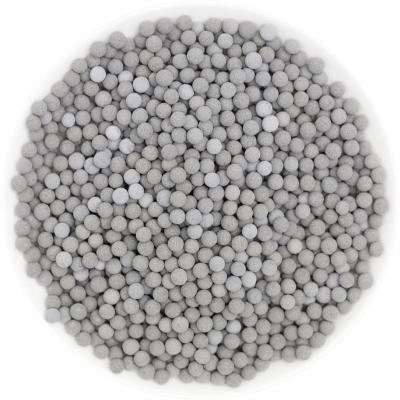
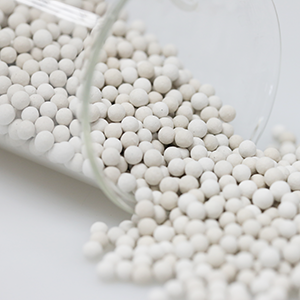
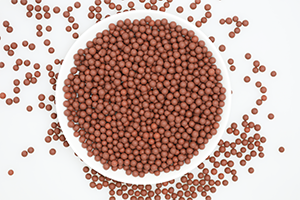
Calcium Sulfite Dechlorination Media for Shower Filters
How to Evaluate the True Cost of Calcium Sulfite Dechlorination Media for Shower Filters
As competition in the shower filter market continues to intensify, filter media pricing has become an important purchasing consideration for many product manufacturers.
Calcium sulfite dechlorination media are a good example. Although different suppliers may offer similar types of dechlorination media, there can be significant differences in price.
But for shower filter manufacturers, the question that really matters may not be:
“How much does one kilogram of filter media cost?”
Instead, it should be:
“How much water can one kilogram of filter media effectively and consistently treat?”
A Lower Price Does Not Necessarily Mean a Lower Cost
For calcium sulfite dechlorination media, the real value of the material ultimately comes down to its effective water treatment capacity and its ability to maintain dechlorination performance over time.
If a filter media has a lower purchase price but its dechlorination performance declines rapidly after a certain period of use, the apparently cheaper material may actually result in a shorter filter life, more frequent replacement, and higher after-sales and end-user costs when incorporated into the finished product.
By contrast, if the media can maintain effective dechlorination performance for a longer period at a similar purchasing cost, the finished product can offer a longer service life and a more stable user experience.
Therefore, calcium sulfite dechlorination media should not be evaluated based solely on the purchase price per kilogram.
A more meaningful indicator is:
How much effective water can be treated by a given amount of filter media?
The Real Difference Lies in Performance Over Continuous Water Flow
Good initial dechlorination performance does not necessarily represent the actual long-term performance of a filter media.
For shower filters, an even more important question is:
Can the media maintain stable dechlorination performance after continuous water flow?
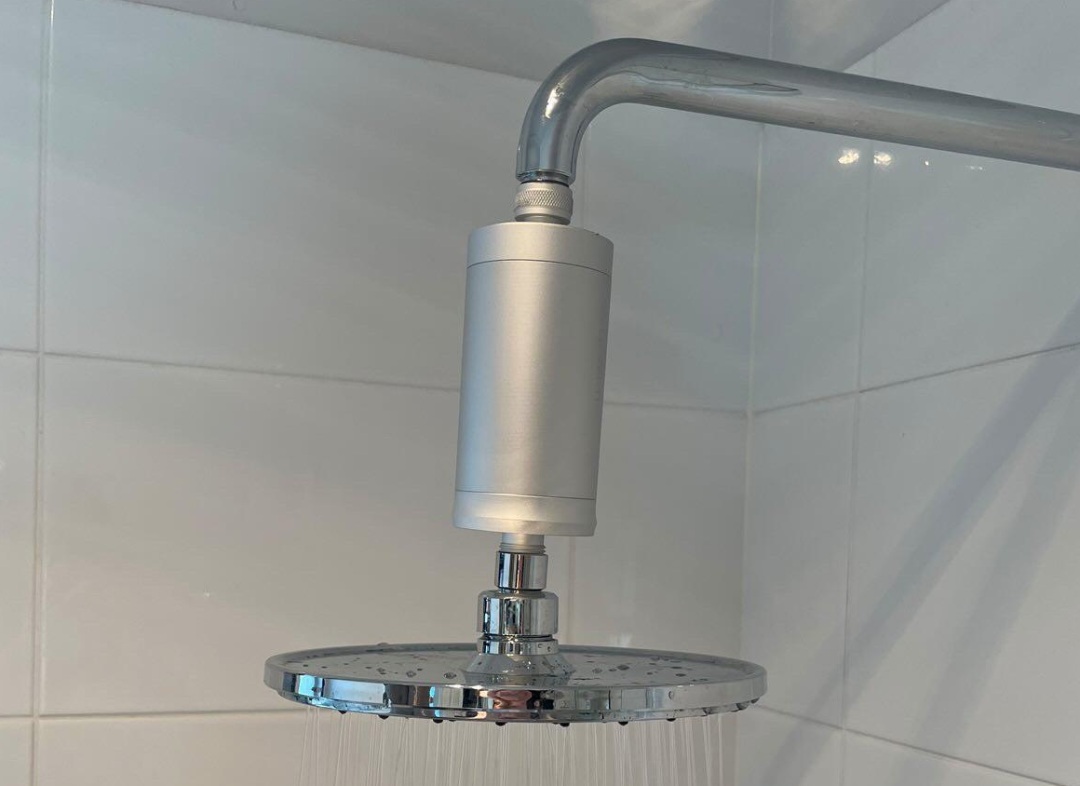
At ETERNAL WORLD, our laboratory conducts continuous-flow performance testing on different dechlorination shower filter products.
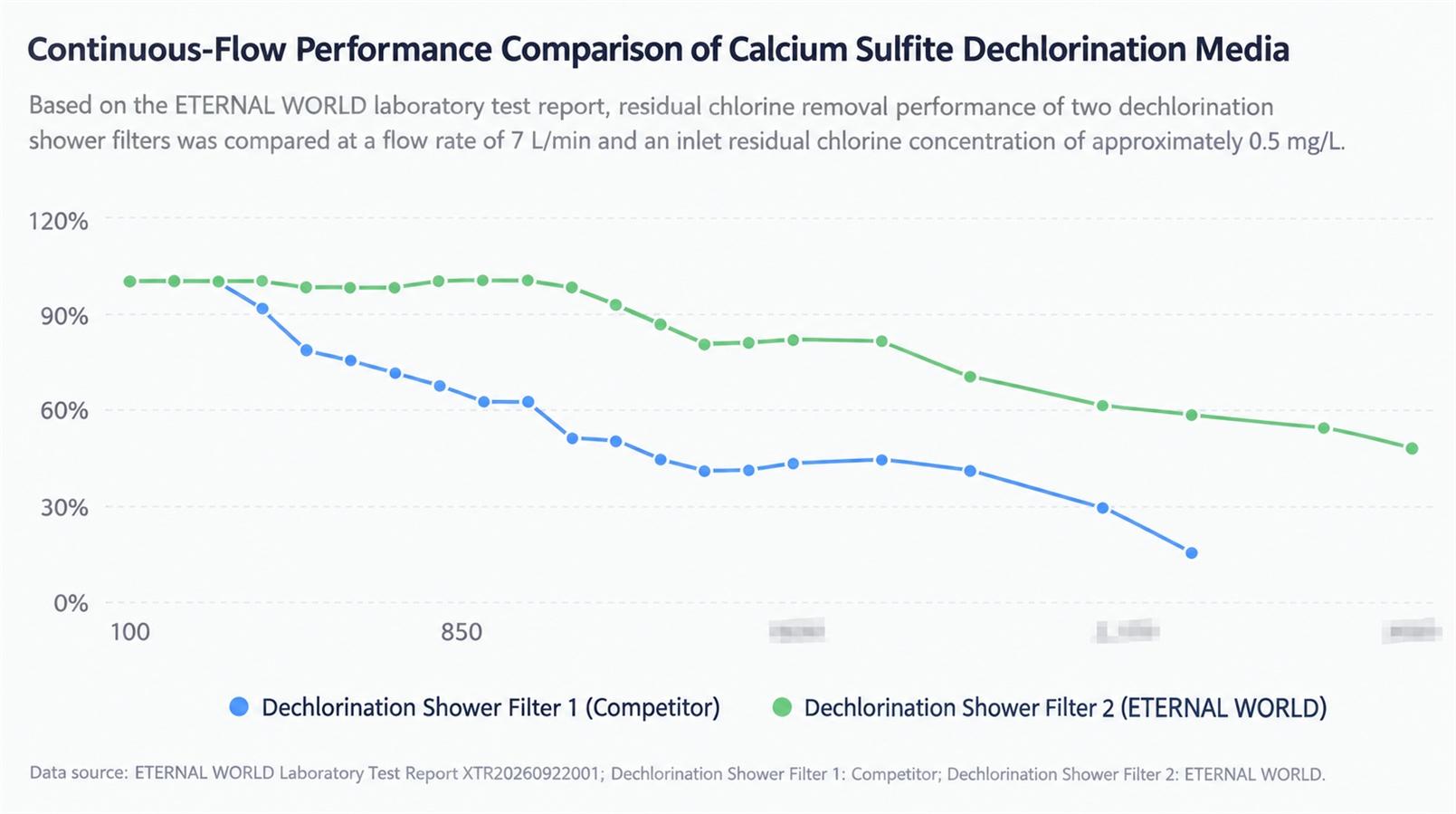
Under the same test conditions, as the cumulative water volume increases, differences in chlorine removal performance between products gradually become more apparent.
Test results show that some comparison samples can maintain a relatively high chlorine removal rate during the initial stage. However, as the cumulative water volume increases, their dechlorination performance begins to decline significantly.
Under the same media cost level as the compared product, the ETERNAL WORLD dechlorination shower filter maintained a high level of residual chlorine removal after treating 1,000 L of cumulative water. Even as the water volume continued to increase, the product maintained an effective level of dechlorination, with a relatively gradual decline in overall performance.
In other words:
The real question is not simply whether a media can remove chlorine at the beginning, but how long it can continue to do so effectively.
A Color Change in a Reagent Is Not the Same as a Real Continuous-Flow Test
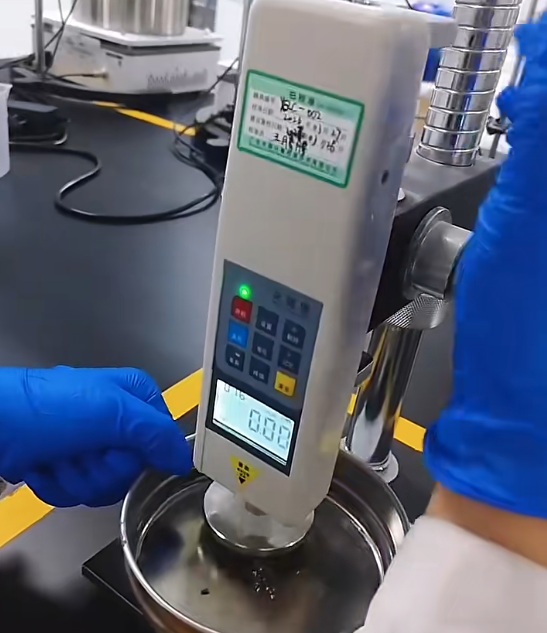
During product development, many customers initially use simple residual chlorine test reagents for quick evaluation.
A water sample can be tested and the color change observed to determine whether the residual chlorine level has changed.
This method is simple and convenient, making it useful for preliminary screening.
However, for an actual shower filter product, a reagent color change alone cannot fully demonstrate whether a filter media can maintain stable dechlorination performance throughout long-term use.
Real continuous-flow testing involves much more complex conditions.
Factors such as flow rate, inlet residual chlorine concentration, media loading, filter cartridge structure, contact time, and cumulative water volume can all affect the final results.
In particular, whether the dechlorination performance declines after continuous water flow is often the real test of the material's performance.
“Can it cause the test reagent to change color?” answers the question of whether the material has an initial effect.
“How long can it maintain effective dechlorination under continuous water flow?” answers the more important question of whether the product can actually perform reliably in real-world use.
For domestic and international brands, especially overseas customers with higher requirements for product performance verification, actual continuous-flow test data can often be far more convincing than a single reagent color-change test.
After all, what a brand ultimately purchases is not simply a bag of filter media, but a solution that can be integrated into a finished product, delivered to consumers, and used reliably over an extended period.
The comparison below shows ETERNAL WORLD calcium sulfite dechlorination media versus a competitor's media at the same price level. It does not represent a comparison with premium or high-end products.
For Shower Filter Manufacturers, Data Builds Confidence When Working with Customers
For shower filter manufacturers, high-quality brand customers often look beyond price. They may also want to understand filter life, chlorine removal performance, test conditions, and batch-to-batch consistency.
In such situations, simply saying:
“Our filter media can remove chlorine.”
has limited persuasive power.
Being able to provide actual continuous-flow test results is much more convincing, especially when the data clearly shows:
Under what flow rate was the test conducted?
What were the inlet water conditions?
How much water was treated in total?
How did the dechlorination performance change over time?
What the customer sees is not just a claim, but a complete performance verification process.
This can help shower filter manufacturers demonstrate product performance to brand customers more effectively while reducing concerns about material performance.
Especially in overseas brand development, ODM/OEM projects, and customized product development, the ability to provide actual test data demonstrates that a supplier can do more than simply “supply materials.”
It also shows the supplier's ability to participate in product validation and technical support.
For shower filter manufacturers, this type of technical support can also strengthen cooperation with high-quality brand customers, helping transform individual orders into long-term partnerships.
ETERNAL WORLD: Making Testing Part of Product Development
To meet different water treatment capacity requirements, ETERNAL WORLD has developed multiple grades of calcium sulfite dechlorination media.
From material performance and particle size to media loading, flow rate, and cartridge structure, the media can be matched according to the actual conditions of the customer's product.
At the same time, continuous-flow testing is used to monitor how dechlorination performance changes at different stages of cumulative water flow, rather than evaluating the product only based on a single result at the beginning of the test.
Good initial performance is only the starting point. Maintaining effective dechlorination performance over time is what truly demonstrates the value of the media.
For customers, these test data are not only evidence of material performance, but also an important technical basis for product development, customer validation, and subsequent marketing activities.
Samples and Mass Production Should Deliver Consistent Performance
In addition to performance, long-term customers are also highly concerned about one important question:
If the sample performs well, can the mass-produced material deliver the same performance?
For filter media suppliers, batch-to-batch consistency is equally important.
Therefore, ETERNAL WORLD retains samples from each batch of calcium sulfite dechlorination media supplied to customers and maintains corresponding batch records.
The purpose is simple:
Samples have a reference. Mass production has a record. Every batch can be traced.
If a performance, batch, or application-related issue occurs later, the retained samples can be reviewed and compared rather than relying solely on the original sample or verbal descriptions.
For customers, this provides an additional level of assurance regarding product quality and consistency.
From “Buying Filter Media” to “Calculating the Cost of Use”
Competition in the shower filter industry is gradually shifting from simple price competition toward competition based on product performance and total cost of ownership.
Whether a filter media is truly worth purchasing should not be determined by the purchase price alone.
A more meaningful calculation is:
Filter Media Cost ÷ Effective Water Volume = Cost per Unit of Water Treated
Even when two materials have a similar purchase price, differences in effective water treatment capacity can lead to significantly different costs over the service life of the finished product.
Therefore, when selecting calcium sulfite dechlorination media, shower filter manufacturers should evaluate multiple factors, including:
Material purchase price
Effective water treatment volume
Long-term dechlorination performance
Filter service life
Batch-to-batch consistency
This is what true cost-effectiveness really means.
The lowest price is not necessarily the lowest cost.
The real value lies in how long the material can continue to perform effectively.